
Monthly Archives: December 2014

payments 2014

Payments in 2014

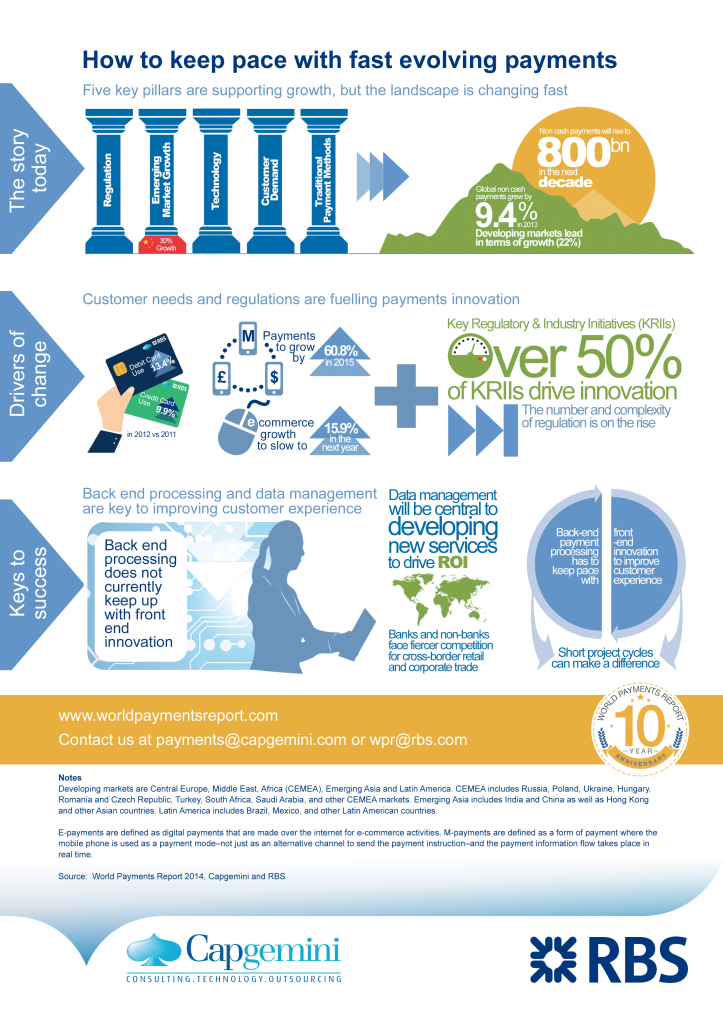
There were many events in the payments sphere that took place in 2014 - a new focus on NFC and mobile payments, the upcoming change to EMV, and the aftermath of the Target breach. There were also major events just outside the industry - but none was as momentous as the Sony hack. As always, you can check out Google’s 2014 Year in Search to see what the United States and the world spent the most time looking for. For more involved readers - check out BCG Perspectives’ Interactive Global Payments 2014.
payments 2014

Breaches

Home Depot. JP Morgan Chase. Sony. Goodwill. Staples. Dozens of smaller hacks. Millions of payment cards, email addresses, and various pieces of personal information compromised. This year, the entire nation learned the importance of having and using security software. It was a sad year for security professional, an expensive one for businesses, and a stressful one for customers.

ApplePay

While contactless payments are not a new idea, Apple brought them into the spotlight with iBeacon, tokenization, and the iPhone 6. Despite these advances, it hasn’t picked up very quickly, likely hindering by security and convenience.

Riding on the heels of ApplePay’s announcement was a similar announcement that some major retailers would be unanimously dropping support for NFC. This move punished all mobile wallet users for a small percentage of transactions, and led to many unhappy customers and lost sales.

Tokenization

Tokenization, thanks to ApplePay, has gained much more visibility as a security measure against fraudulent transactions. Tokenization substitutes a token in place of a sensitive piece of data. Think of an amusement park or arcade room - you pay for tokens, and use the tokens to operate the machines. Although the tokens have no value, the machines only accept tokens, as they represent value. Having your tokens stolen isn’t as bad as having a card or wallet stolen, and nobody can figure out your card info or where your wallet is by looking at your tokens. Instead of transmitting payment card data, tokenization creates a unique ‘token’ that is transmitted in its place. It is recognized by the terminal and the payment is approved.

Near Field Communication

NFC got a kick start. Softcard (which changed it’s name to distinguish itself from a terrorist group), Google Wallet, and others were brought to the stage as ApplePay stole the spotlight, allowing thousands of iPhone users to pay with their mobile devices, even if those thousands of people never materialized. Predictions for the mobile payments industry have always been optimistic, they just tend to be overly optimistic.

CurrentC

NFC also dodged a kick in the teeth with the release and subsequent hacking of CurrentC. CurrentC was released by Merchant Customer Exchange (MCX, a retailer group led by Walmart), and was hacked before the app was officially released. It should be noted that CurrentC does not use NFC technology; instead it utilizes QR codes and directly transfers funds from a customer’s bank account.

Bitcoin

Bitcoin was expected to take off - but didn’t. Prices were expected to be in the thousands - it’s in the hundreds. It’s the most volatile currency by far, and always has been. Bitcoin may not make it, but it may be the right step towards a universal currency. None of this is to say that it is not a popular, frequently traded currency.

Alternative Lending

What about alternative lending? It took off in a big way. Lending Club and OnDeck both had IPOs, a good sign for the industry. With banks unwilling or unable to support small businesses, these events have shown a glimpse of the future of small business lending, where banks don’t play as a large a role.

Consumer Landscape

Now, take a step back from this 2014 review and think about how consumers payed for purchases. There were many breaches this year, with millions of cards compromised. Mobile wallets took off but didn’t get too far - many businesses simply do not accept NFC, and many consumers are afraid to pay with their mobile devices. What does this say about the payments industry, and how will we overcome it? Consumer actions always make the final decision - what will happen if they decide if their payments can be so easily compromised (or appear that way)?

What’s going to happen in 2015?

Our light predictions for 2015 start with increased security. 2014 exposed many openings in payment security and data security, ones that we hope 2015 will close.

Next is further adoption of NFC - possibly with the closing of NFC vs other QR codes as a method of authentication. However, a true standard for mobile payments is many years in the future.

EMV will come into effect in October, but not all merchants will change their hardware on time - to their detriment.

Anything can happen, so we’re not crossing our fingers. See you next year!

Follow us on Facebook, Twitter, and LinkedIn for more on the payments from a business perspective.

LinkedInFacebookTwitterGoogle+Share
nfc wave

NFC - Everything A Small Business Needs to Know

The payments industry is an intricate, twisted mass of old and new competitors, each vying for market share like lions on a carcass. That analogy isn’t far off, as several nationwide chains, including CVS and Rite-Aid are refusing to accept all NFC payments just to stick it to Apple. On the retailer side, a conglomerate led by Wal-Mart has released their own digital wallet, CurrentC, which was hacked and compromised almost immediately.

But what about EMV? It’s still on the horizon. In October, 2015, businesses without EMV compliant hardware will be held liable for fraudulent, card-present transactions. Card issuers will release new cards, also known as chip-and-pin cards. These cards have been active in Europe for about a decade, and the continent has seen a drastic reduction in compromised card information since then.

Confusing and irrelevant for most consumers, the payments war continues. NFC and EMV are not competing technologies - they are complementary in the payments field. A chip-and-pin card can be used in a digital wallet with no hassles. Businesses are lucky; merchant services providers have terminals that are able to accept contactless forms of payment as well as chip-and-pin.

What is NFC?

nfc logo

The Near Field Communications Logo

Near-field-communication (NFC) is a proximity-based method of communicating via radio waves between enabled devices. It’s most known for the payment industry’s recent takeoff, which includes front runner Google Wallet, Softcard, and latecomer ApplePay. However, it is also useful for transmitting large amounts of information between two devices, and can even read smart tags, which are similar to QR codes.

NFC & Security

One of the biggest obstacles to widespread adoption of NFC-based payments is the state of security surrounding the technology. This is a complicated discussion, but needless to say, NFC is secure and is here to stay.

Here are some highlights: NFC technology is only effective in a range of about 10 cm, and its zone of interaction is not spherical, it’s very specific and in only one direction (if you’ve used contactless payment methods before, you know what this is like). This is the strongest security feature of NFC technology.

While using a contactless payment method, the interaction between your phone and the terminal is a one-way transaction. The terminal simply subtracts a certain amount from the smartphone’s digital wallet, and everyone moves on.

It’s important to remember that NFC has been around for years. The technology is no longer new, instead it’s being tested and adopted for the most efficient commercial use. It’s gone through rigorous testing and isn’t always perfect, but it would never have gotten this far if it was incapable of 1) protecting payment card information and 2) providing the cheapest and most efficient platform to pay with a mobile device.

It’s even more important to remember that no technology is 100% safe. Use common sense. Don’t pay with your phone if you don’t trust the retailer. Nothing is silly when it comes to protecting your information.

Landscape for Merchants

Based on information collected during the post-Thanksgiving shopping bonanza, only a small percentage of eligible Apple Pay users are actually using Apple Pay. CVS, Rite-Aid, and others are national. They can afford to invest in new hardware that will benefit them in the long term, while not risking as much today.

Small businesses - Main Street or otherwise - do not have that luxury. Since adoption of NFC tech is not yet widespread, businesses will have a hard time justifying the expense of a terminal.

As a merchant services provider, our goal is to provide the most efficient and useful payment processing services at the lowest cost. Because of the turbulence in the industry and lackluster adoption of the new standard, our recommendation is to pass on NFC enabled terminals for now.

NFC is the direction in which the industry is headed, so don’t throw it out the window. You will need to be able to accept contactless payments, and you will need to protect the security of your customers’ information, so keep an eye on our blog or give us a call to learn what we can do for you!

If you liked this article, follow us on Facebook, Twitter, and LinkedIn.

wellness day

First Annual Choice Wellness Day

Today was the First Annual Choice Wellness Day! As the year draws to a close, it’s hard not to look back and reflect on our personal lives. The intention of this event was to give back to the employees that have built this company from the ground up in the most meaningful, lasting way: by protecting their health.

Two massage therapists from Natural Balance Therapeutic Massage set up shop in a conference room and were booked for the entire day. Their services were fantastic.

natural balance therapeutic massage

A local juice bar, Juice Heads, prepared smoothies with freshly squeezed oranges, ripe bananas, and a handful of other nutritious ingredients. They were a runaway hit!

juice heads juice bar


We were joined by local representatives of Prudential to care for the financial well-being of our employees. Home insurance, life insurance, retirement funds - they do it all.

A representative of TLS Weight Loss Solution was also on-site to coach and nurture our employees to find the right balance of diet, exercise, and nutrition.

The entire event was a huge success! Choice employees had a fantastic time, and the event boosted our energy in time for the new year. Planning has already started for the Second Annual Choice Wellness Day, with many more events in between.

#WellnessDay #WellnessWednesday

Christmas Wish 2014

Choice Merchant Solutions was at Christmas Wish 2014, hosted by Lite 100.5 WRCH and Lake Compounce, last Friday December 5th. We had an amazing time, so we’re posting a few photos to immortalize the moment.

Special thanks to Mike Stacey and Allan Camp of Lite 100.5 WRCH, Lake Compounce staff, and all of the volunteers at the event!

Christmas Wish 2014 Photos

Despite the cold weather, the event was a huge success. Read more about Christmas Wish 2014 on the WRCH website!


cb dispute chargeback

CB Dispute Announces Pre-Chargeback Alerts

CB Dispute, a chargeback management and prevention business, has recently announced the ability to prevent chargebacks by issuing pre-chargeback alerts to businesses.

What is a chargeback?

A chargeback is the result of a customer disputing a charge on their credit or debit card. They elect not to pay the charge, and as a result, a business loses the product AND the cost of the product. This is much more damaging to a business.

A chargeback can also be a fraudulent charge. If a card is lost or stolen, thieves may place orders, which are NOT authorized by the cardholder. This is the worst situation, as the business, the customer, and the credit card issuer face possible losses.

How much does it cost to fight a chargeback?

For many beleaguered business owners, fighting a single chargebacks can take several hours and a bit of money. Chargeback penalty fees from merchant services providers typically cost $25 - $55, in addition to the above. Having a pre-chargeback alert system prevents the fee, and in most cases the business will be notified before shipping the product.

Chargebacks and High Risk Merchant Accounts

Chargebacks are even worse for high risk merchant accounts. Because of their business models and heightened risk factor, they are more vulnerable to chargebacks and sometimes have to prioritize protecting the merchant account over losing the product. When a merchant account is terminated, a business may not be able to obtain another without using a separate business license, making chargeback prevention one of the most valuable services for business continuity.

Why is it better to find out before?

CB Dispute’s new pre-chargeback alerts allow a business to find out about disputes and chargebacks before they reach their merchant services provider. The value provided by this is immense. By allowing the business to handle the problem before it worsens, the business merchant account is protected from chargeback fees, sidesteps an increase in risk, and doesn’t have to spend valuable time combating chargebacks.

How do I find out more?

CB Dispute representatives are standing by to assist business owners with any questions they have regarding chargebacks, chargeback prevention, or chargeback management. Just fill out the form below to start saving your business time and money.

Fields marked with a * are required
virtual terminal

12 Things You Can Do with a Virtual Terminal

A virtual terminal is a fantastic tool that is available to businesses of all sizes. For high risk merchant accounts in particular, it provides a more robust security suite that includes a multi-step authentication process, detailed tracking and reporting software, and is accessible anywhere the internet is available.

Our team has put together some tips on how to utilize your virtual terminal to its fullest extent:

  1. Accept Payments Online – this is the basic function of a virtual terminal. It allows business owners to accept credit and debit cards as a form of payment by entering the card information manually into a computer’s web browser.
  2. Initiate a Direct API Connection – the virtual terminal isn’t just about manual input, it can also seamlessly integrate onto an ecommerce website, transforming any business into the next Amazon.
  3. Plug in an Encrypted Card Reader – accept EMV cards (also known as chip-and-pin cards), usually with a USB attachment. Chip-and-pin cards require a typed PIN when paying with an embedded chip card, adding multiple layers of security to the transaction.
  4. Process Batches of Transactions – many businesses have a high number of customers making single transactions, and they can be uploaded in Excel format or as comma separated values (CSV) to avoid transcription errors and save time.
  5. Store Card Information – the virtual terminal can store customer information securely so that users can create accounts and keep information on file for future transactions. These functions are typically PCI Compliant by storing the data remotely, but be sure to ask.
  6. Delay a Transaction - Authorizes a card after the job is done, or after services are rendered. This is necessary for some businesses that take time to take effect (e.g. credit repair).
  7. Generate Customized Reports – build your own reports, using the information you want to use and that is important to your business model.
  8. Create Multiple User Accounts – create accounts to track usage, restrict access according to PCI guidelines, and reduce clutter for employees.
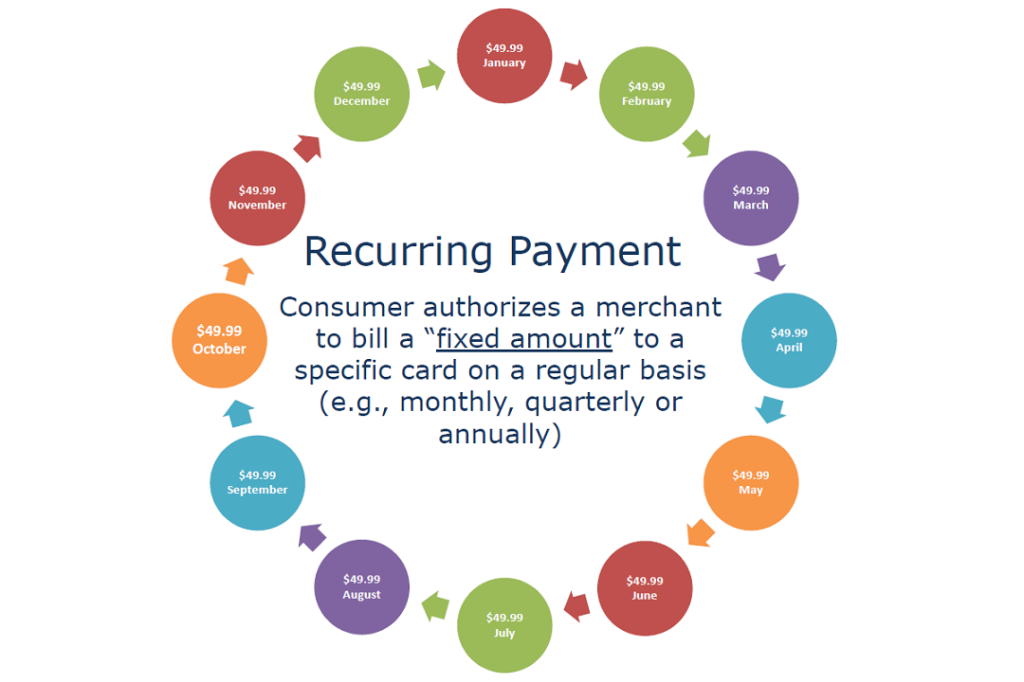
  9. Set up recurring billing – many businesses have a high number of customers making regularly scheduled transactions, such as subscriptions. These can be structured in one of two ways:
    • Unique billing schedule per customer – this allows the most flexibility in pricing and scheduling by allowing a user to set up individual plans per customer.
    • Plan billing schedule – this assigns customers to plans, where they are all billed identically, which is ideal for businesses with large user bases.
  10. Send Electronic Receipts – gone are the days of paper. Go green by emailing your customers receipts automatically or manually. Most virtual terminals convert them to Portable Document Format (PDF) and email them directly to customers email addresses.
  11. Prevent Fraud – OK so you don’t actually to do anything for this one. Using real-time fraud detection software, your virtual terminal will guard your business from fraud by using a multi-step authentication process or by canceling the transaction.
  12. Pair with a Mobile Payment System – many virtual terminals can easily sync with a mobile payment device or app. Not every provider offers this, so be sure to check first!

PCI Compliance is always a factor when evaluating a virtual terminal for your business. Operating a virtual terminal reduces the contact points for some of the main triggers of PCI Compliance, but not all, read this article to stay up to date on PCI DSS.

Hopefully these tips have opened new doors in your mind for your virtual terminal and will help you make the most of your merchant account. For more information, fill out the form below!

Fields marked with a * are required

Follow us on Facebook, Twitter, and LinkedIn for more tips & tricks for your business merchant account.